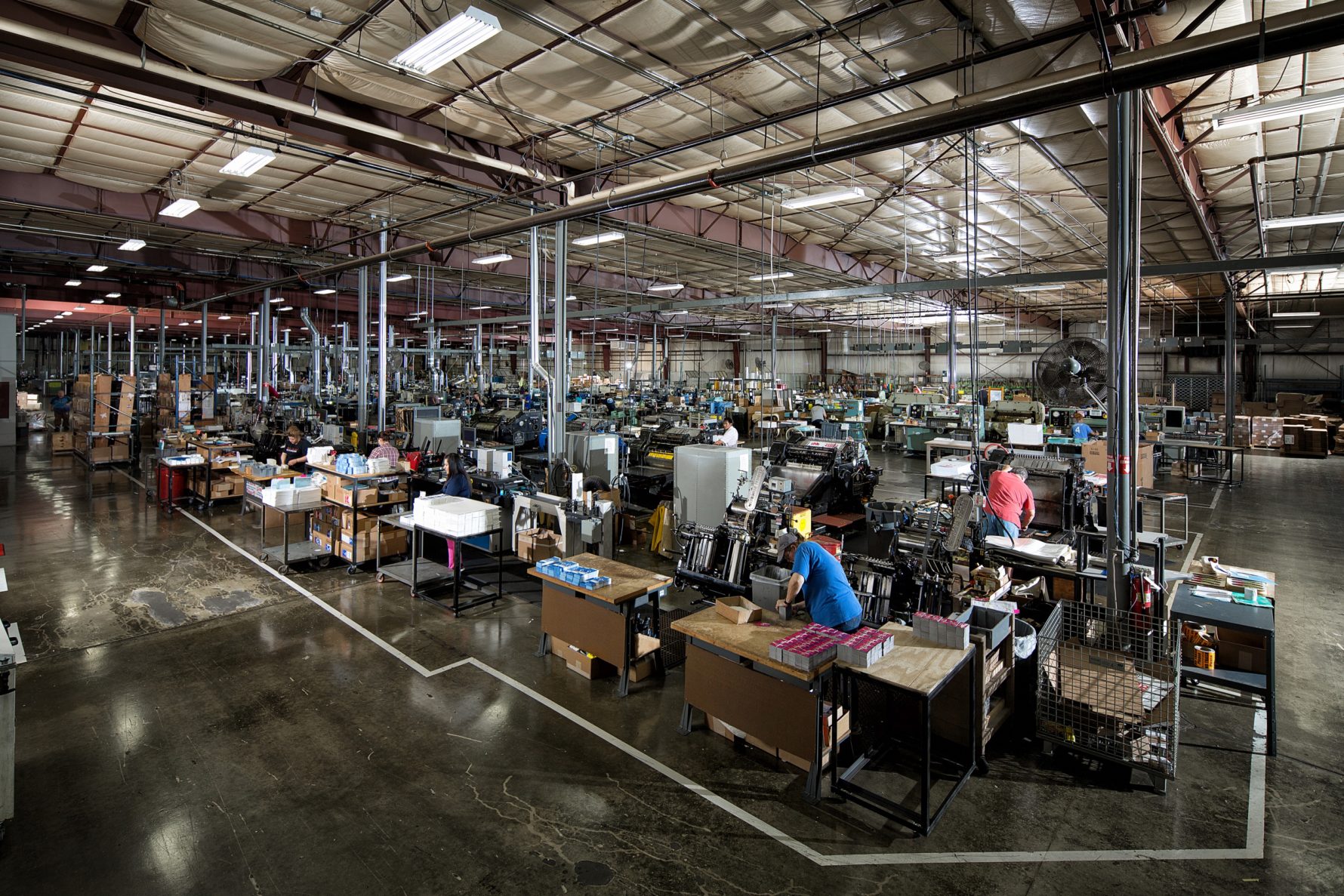
Printing Processes
We have multiple printing processes available for our customers.
Screen Printing
Making a Screen
In screen printing, screen fabric is stretched over a frame. The print resolution and the viscosity of the ink determine the grade of the screen fabric and the weight of the fibers. A template coating is applied to the screen fabric either manually or photomechanically. The actual motive to be printed can be anything at all. For example, the template material could be a light-sensitive emulsion. If a printing film on this coated screen is then exposed, the emulsion on the exposed areas hardens and the unexposed areas can be rinsed clean with water.
Printing the Image
A rubber squeegee draws ink across the screen, transferring it through the mesh of the fabric onto the desired material wherever the screen is not coated. The screen is then lifted away and the print piece is ready.
Why Choose Screen Printing:
-
-
- Screen-printing inks are ultraviolet (UV) light-cured, pigmented colors.
- These inks are glossy and very resistant to chemicals and abrasion.
- Screen-printed materials are weather proof and waterproof and may be used indoors and outdoors.
-
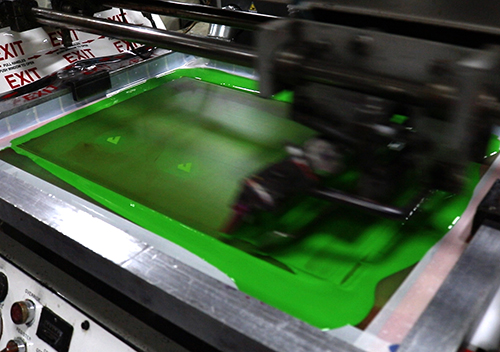
A squeegee draws ink across the screen transferring the
image through to the substrate.
Flexo Printing
Flexography is a high-speed printing process that uses flexible plates made of rubber or plastic. The inked plates have a slightly raised image and are rotated on a cylinder to transfer the image to the substrate.
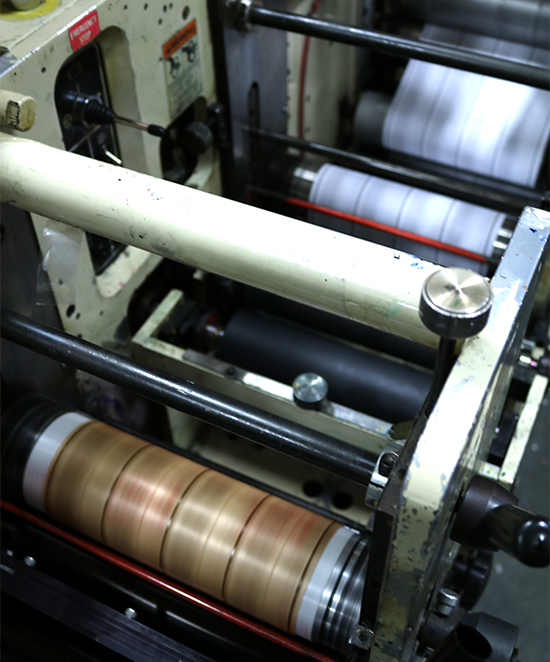
A rubber plate with a raised image rotates on a cylinder to transfer the image.
Flexo Printing Has Many Benefits:
-
-
- Flexography is very economical.
- In addition to creating full-color materials, most flexographic presses accommodate laminating and die-cutting processes to protect the products’ final shape and size.
- Flexo-printed materials are not weather proof; therefore, we recommend them for indoor use only.
- Flexo-printed inks will vary slightly in color from our standard screen-printed inks.
-
Digital Printing
Our ever expanding digital printing capabilities range from outdoor durable UV-cured inkjet to detailed indoor-use liquid based toner technology. Digital printing utilizes four-color process (4CP) inks. Process cyan, magenta, yellow and black are combined in varying densities to create a wide range of shades so you can offer more colors without adding additional spot colors.
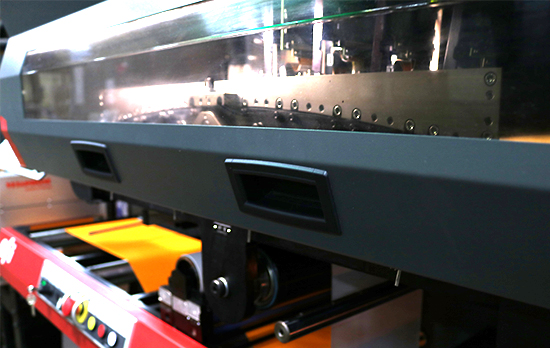
Digital printing offers enhanced detail and range of colors created by combining cyan, magenta, yellow, and black.
Benefits of Digital Printing:
-
-
- Detailed print quality.
- Wide range of colors on single printed piece without adding spot colors.
- Short-run efficiency.
- The ability to include variable data and barcodes.
-
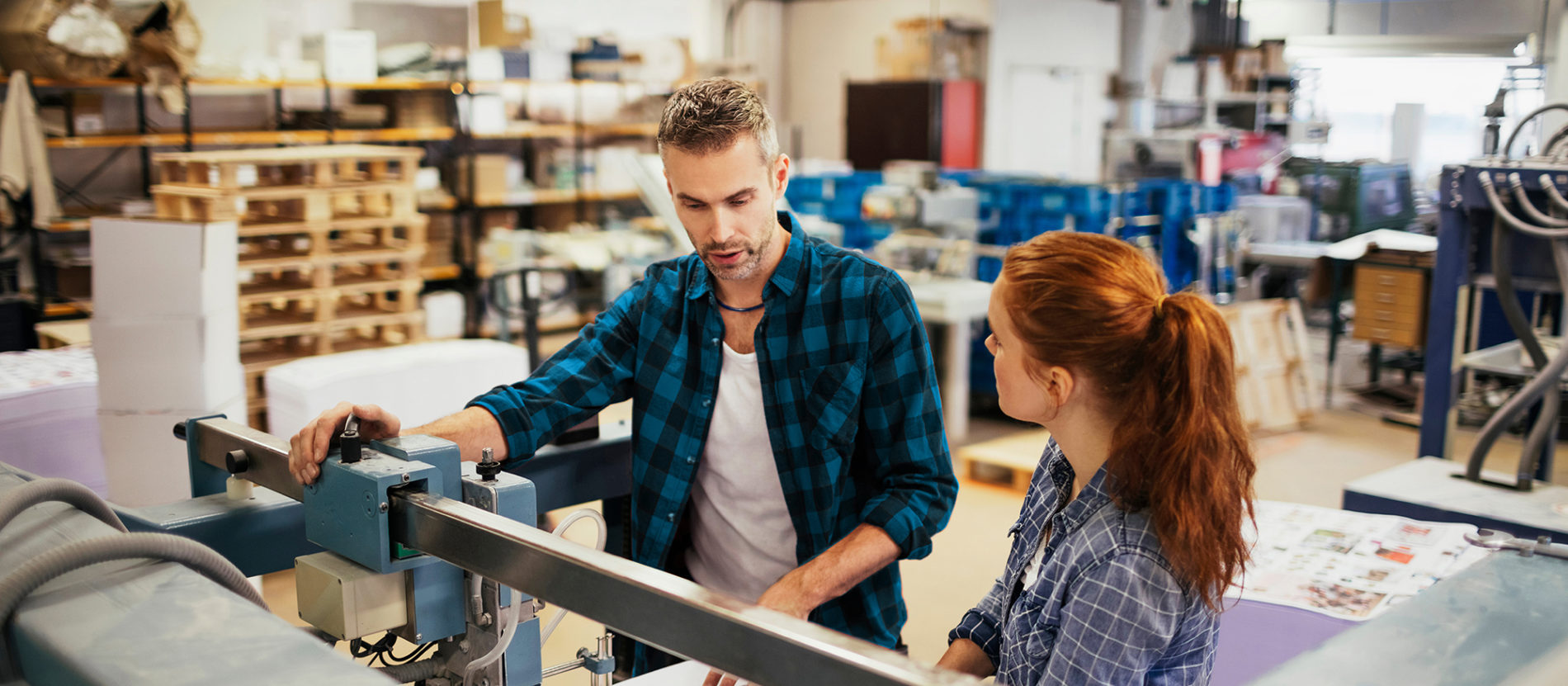
We’ll take care of your print order and you, ensuring you get what you want and what you need.